Birds & Blooms
The 2026 Birds & Blooms Project was an educational series designed to highlight a bird and flowering plant species seasonally relevant to each month of 2026.
Whether featuring a native or migratory species, each print design was brought to life through digital illustration to encourage awareness of the natural world. I wanted this series to divert attention and excitement to learning about the species we share a home with. Education leads to awareness, leads to caring, leads to conservation.
Unfortunately, a project like this requires more time, effort, and resources than I was able to keep up with, especially alongside a newly developing small business. For now, the print series has been discontinued, but I hope to revisit it in the future as a more established local artist. Thanks for following along!
5×7” Digitally Illustrated Prints
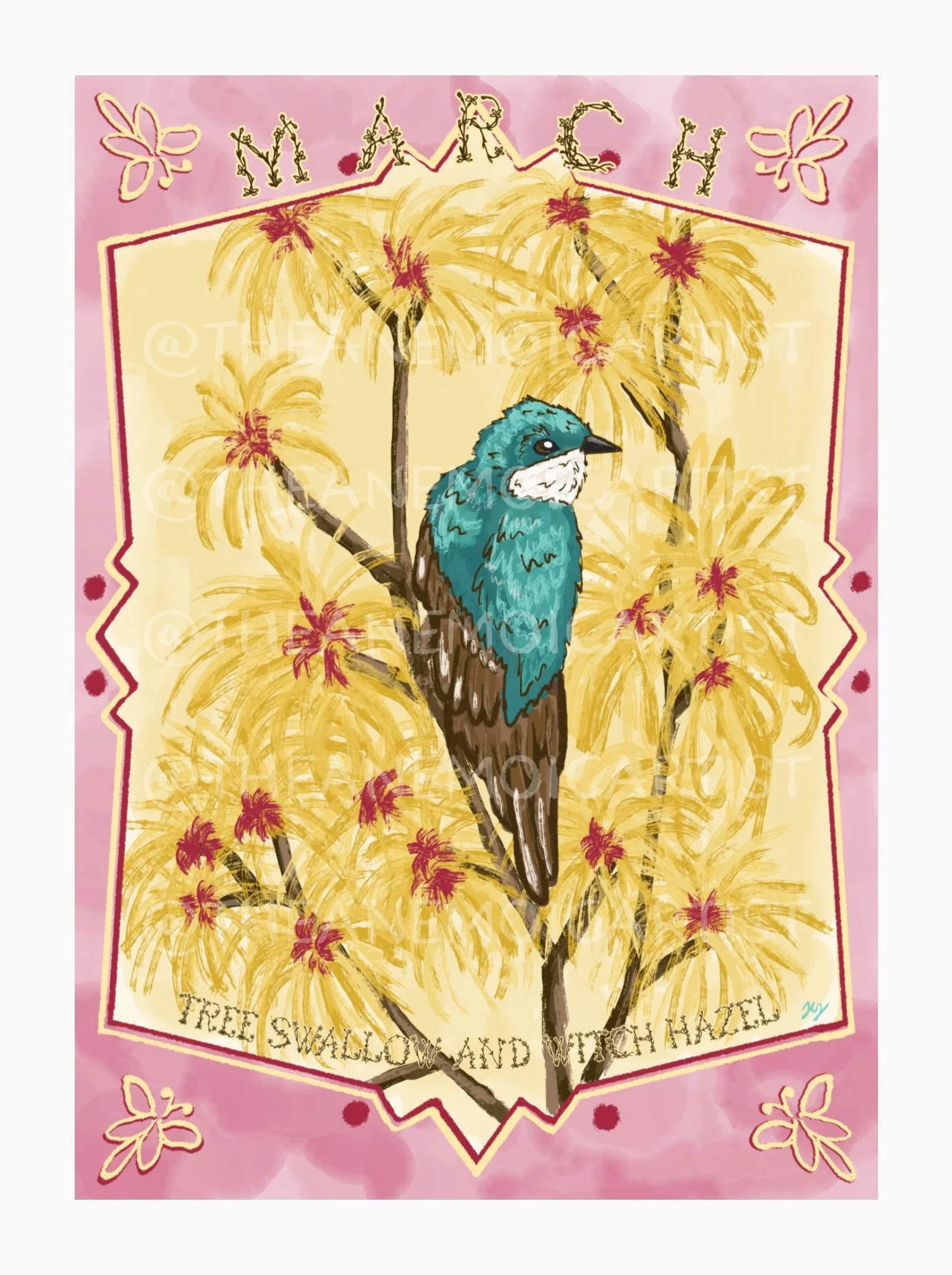
Inspired by wishes of an early spring, March’s 5×7” digitally illustrated Bird & Bloom print features a Tree Swallow perched upon sprigs of Witch Hazel.
Tree Swallows take up spring residence in large flocks, nesting in cavities alongside rivers and lakes. An iridescent greenish-blue with white cheeks and bellies, Tree Swallows are among the first migratory birds to grace Tennessee with their presence, and the first swallows of spring.
Ozark Witch Hazel is a flowering shrub native to the Ozark Plateau (Missouri, Oklahoma, Arkansas) that is distinguished from other species by its tendency to bloom in late winter (December- March) rather than fall. I painted this species as I wish the native Witch Hazels here were in bloom! These shrubs are used for a variety of medicinal uses, as they are natural astringents with anti-inflammatory properties.
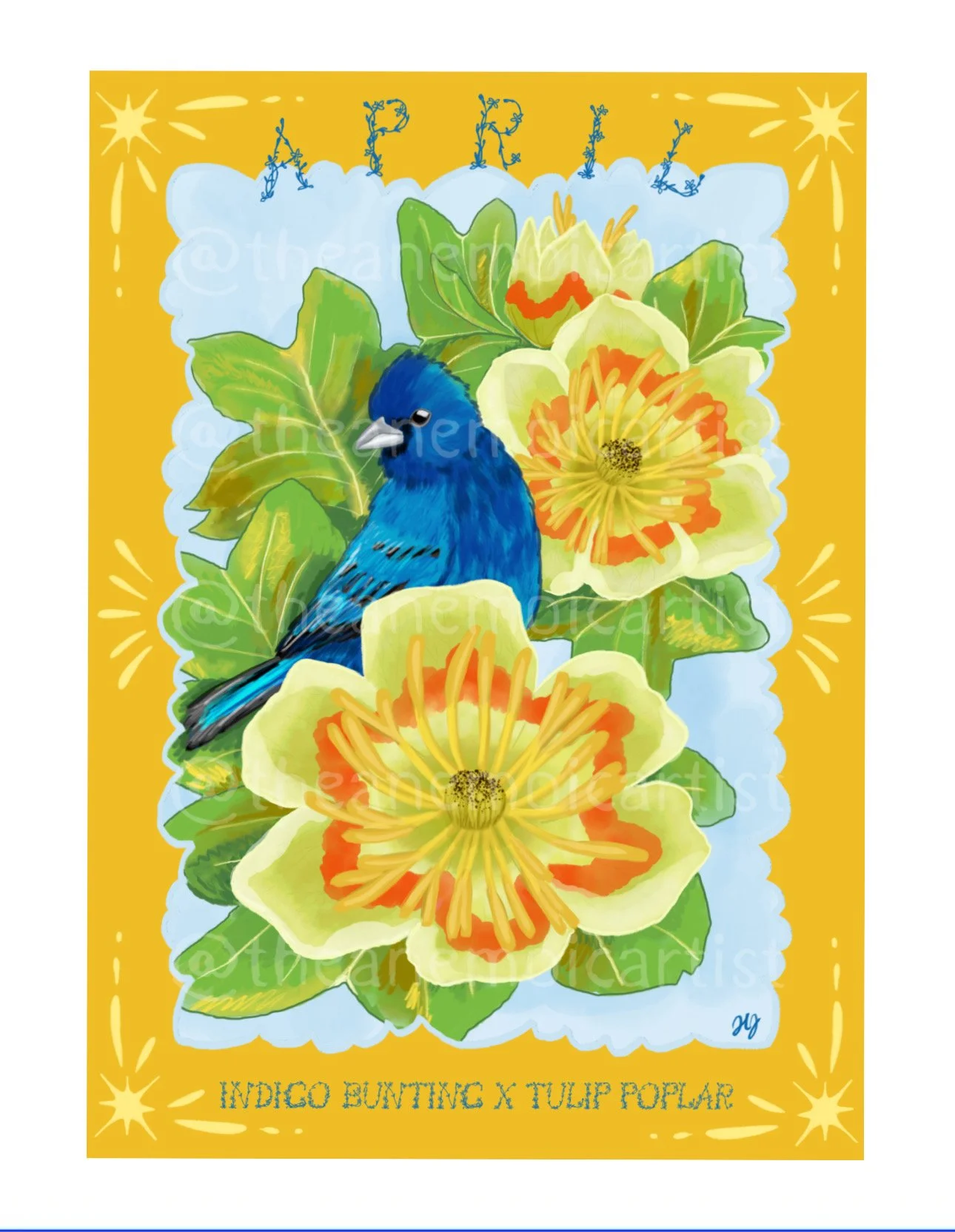
Featuring a bold Indigo Bunting perched among bright Tulip Poplar blossoms, this 5×7” digitally illustrated print honors the arrival of both species in East Tennessee.
Preferring shrubby areas, forest edges, and fields thick with native grasses, these migratory songbirds in the Cardinal family boast bright, bold, blue plumage (males) and arrive in Tennessee mid-April. Lovers of berries, insects, and seeds, be sure to keep the sunflower seeds well stocked in your backyard feeder in hopes of catching a glimpse of one! (Or you could visit Seven Islands State Birding Park and see lots of them!!)
Tennessee’s state tree, the Tulip Poplar, is a tall native boasting bright lime green and orange contrasting blossoms, reminiscent of tulips (hence the name). These blooms unfurl between late April and June, sustaining both insects and hummingbirds alike.
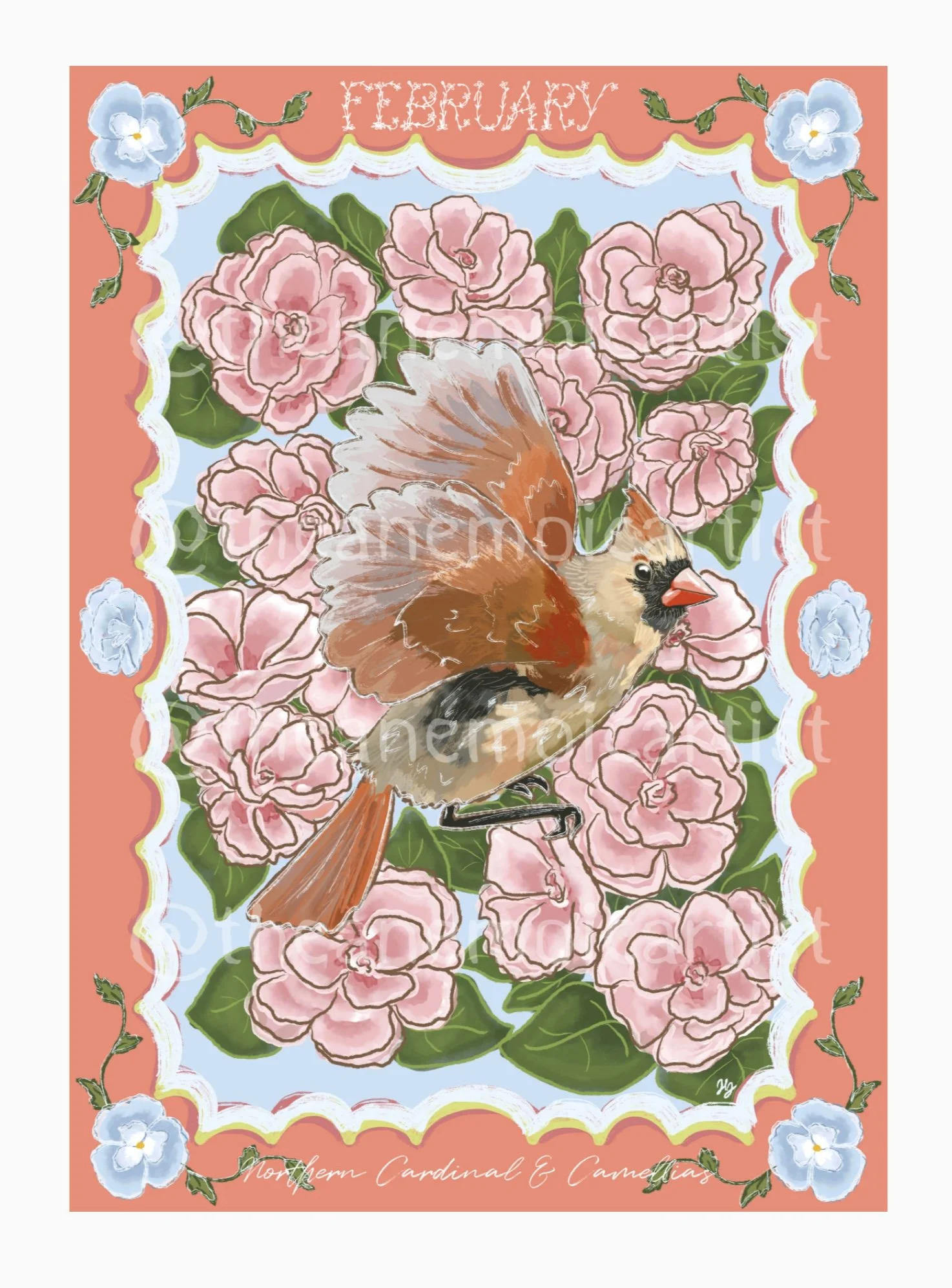
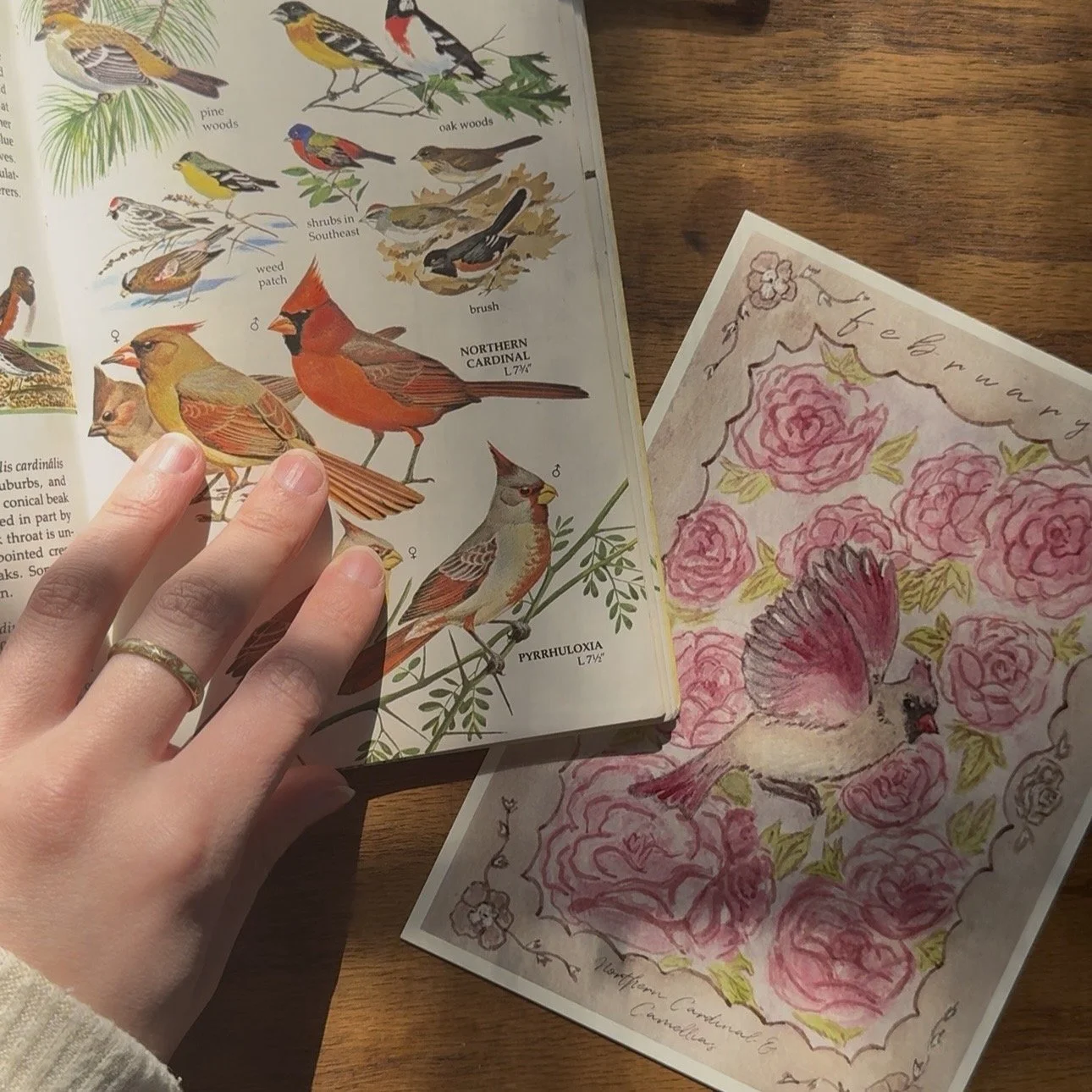
February’s 5×7” digitally illustrated print features the Northern Cardinal & Camellias.
The Northern Cardinal is a non-migratory perching songbird common throughout the Eastern United States. Seven states claim them as their state bird. Males boast bright, “cardinal” red plumage with black masks and a bright orange bill. Females are much more conservative with a lighter, greyish brown plumage and red highlights on the wings, tail, and crest, but share the bold beak.
Camellias are mid-size ornamental evergreen shrubs native to Asia, prized for their ruffle-y layered pink blossoms that persist from fall to spring months. The Camellia sinensis variety is especially coveted for its ability to produce white, black, green, and oolong teas through a multitude of processes. Known for symbolism centering on love and admiration, it is a perfect bloom for this time of year.
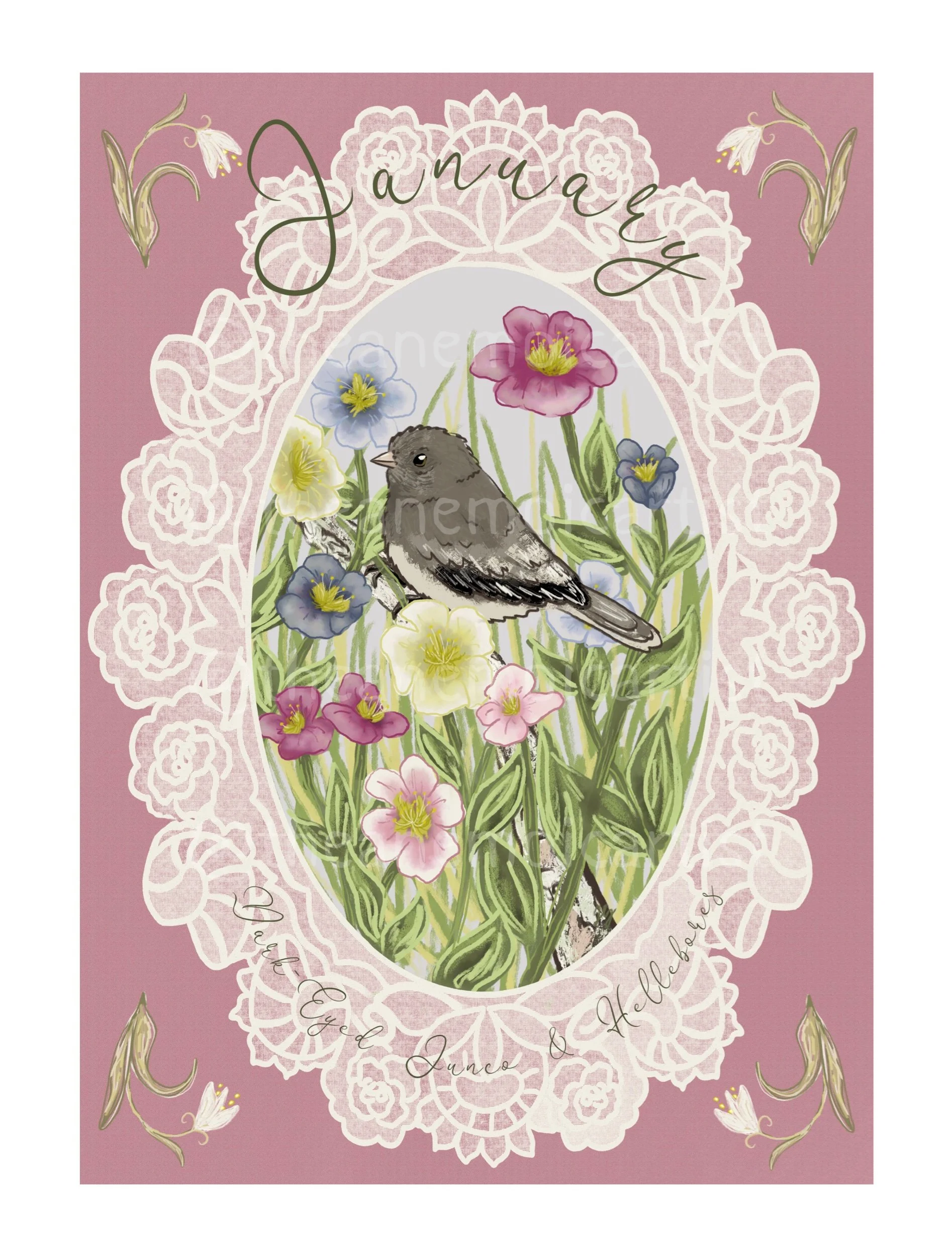
This 5×7” digitally illustrated print is part of my 2026 “Birds & Blooms” project (DISCONTINUED) where I design a print featuring a seasonal bird and bloom for each month. January’s print features a Dark Eyed Junco (Slate) and Hellebores.
The Dark Eyed Junco is a small sparrow found across North America. Known as “Snowbirds,” they are common overwinterers in the state of Tennessee. Their coloring varies from east to west, the eastern phase being slate colored with a dark grey head and grayish back that lightens as it melds into a white breast & outer tail feathers. Its western counterpart shows off a light rust colored breast, significantly darker head, and a lighter, brownish back, and is commonly known as the “Oregon” plumage variant.
The Hellebore is a hardy perennial also known as the Winter Rose due to their tendency to bloom in late winter to early spring. They are low maintenance and deer resistant plants boasting a wide variety of colorful blooms ranging from dark slate blues to onyx purples to bright speckled magentas with lime-green to pale-yellow centers.
All remaining prints will be available at the following in-person events while supplies last:
Ijams Hummingbird Festival
8/15/26
AWAITING CONFIRMATION
Clinch River Fall Antique Festival
10/3/26
Historic Downtown Clinton, Tennessee